
Every sociopolitical reference I could find in “Y Tu Mamá También"
A film nerd’s unintentional crash course in race, gender, and class in 20th century Mexico

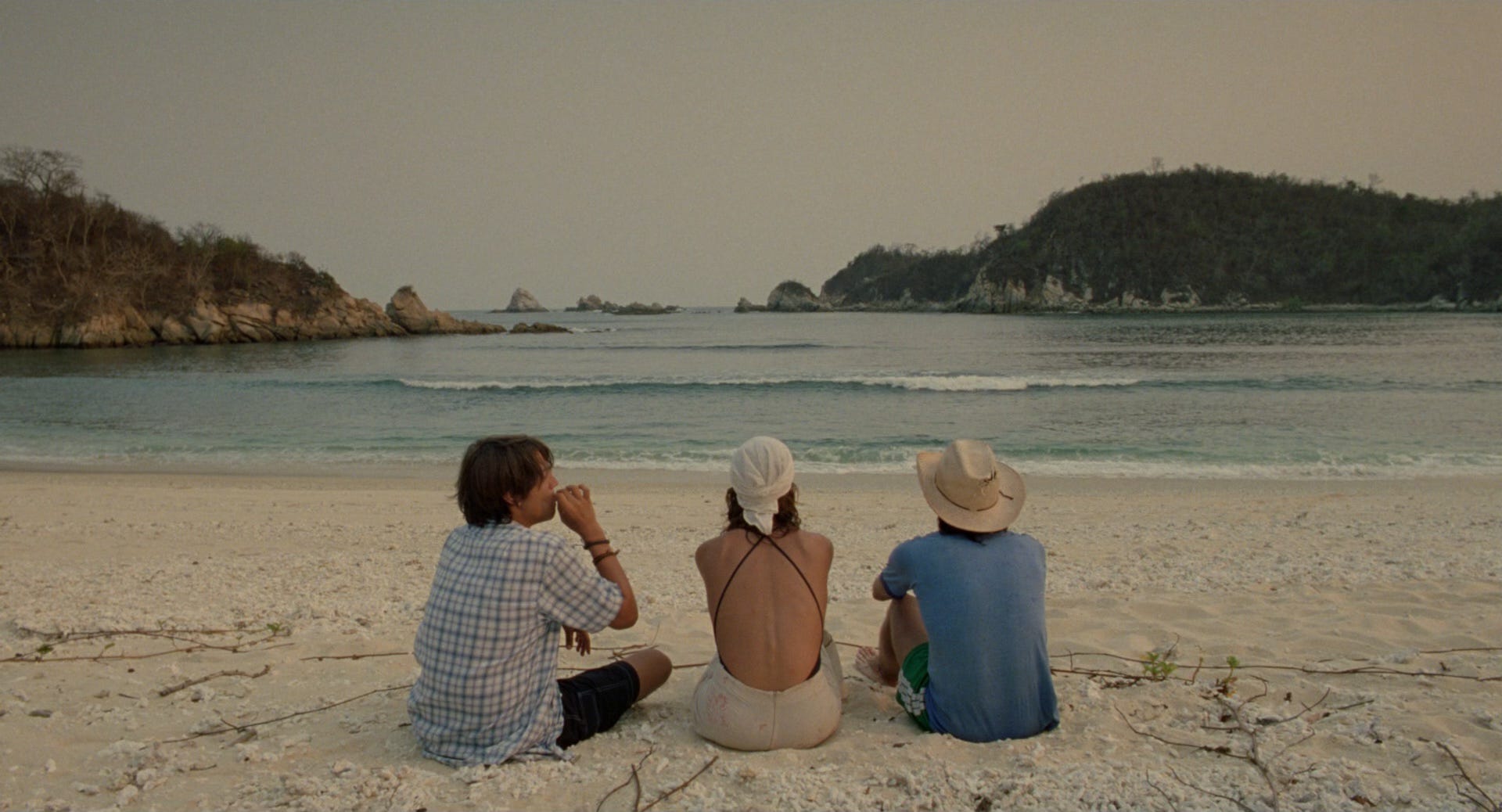
It took some convincing to get me to watch Y Tu Mamá También.
With the increasing popularity of threesome movies like Challengers and Materialists, I originally thought that Y Tu Mamá También would be more of that. Mediocre heteronormative smut disguised as some kind of ground-breaking sexual revelation.
To be fair, Y Tu Mamá También does open with all the desperate hormone-fueled coupling you’d expect from a coming-of-age story. But as the story unfolds, it slowly becomes clear that there is so much more.
Teenage friends Tenoch and Julio are as oblivious to the sociopolitical climate around them as they are to the homoerotic tension between them. Through their messy, jealous entanglements, we are invited into an intimate look at civil unrest and struggles with poverty in Mexico shortly before the fall of the PRI (Institutional Revolutionary Party).
In my never-ending search for knowledge through storytelling, I assembled a list of every sociopolitical reference in the Y Tu Mamá También I could find. Please note, I’m not Mexican, so there may be things I missed or misinterpreted. I’m open to corrections. And I hope you find this every bit as fascinating as I do.
Warning for spoilers ahead.
A deep dive into the 25 references I found
Bracelets on the Riviera. While Tenoch and his girlfriend Ana are having sex, they tell each other which people they’re not allowed to have sex with (specifically, which racial identities are off limits). Tenoch includes “those dirty Mexicans selling bracelets on the Riviera.”
The Mexican Riviera encompasses several major tourist destinations off the west coast of Mexico. Tenoch is likely referring to beaded bracelets originally developed by Indigenous artists in pre-Columbian, Mesoamerican tradition. Despite being Mexican himself, Tenoch sets himself apart from “dirty Mexicans” whom he sees as lower class than him.
Ana’s family. Ana, Tenoch’s girlfriend, is a white, middle class girl from an intellectual family. Her mother is a French divorcée and teacher at the Institute for Foreigners. Her father is a journalist turned politician who now works at the Municipal Government of Mexico City as Director of Logistics in the Department of Culture.
While it’s unclear if the school at which Ana’s mother works is part of the Agency for French Education Abroad (AEFE), French elites are notorious for sending their children to private school abroad. These schools are subsidized by taxes, though people in France don’t benefit from them at all.
Death of a migrant bricklayer. Tenoch and Julio were stuck in traffic after dropping off their girlfriends at the airport. While there were three demonstrations in the city that day, the traffic jam was caused by Mercelino Escutia, a migrant bricklayer from Michoacán who was hit by a speeding bus. He never used the pedestrian bridge, which would be safer, because it made his commute too long. His body went unclaimed in the city morgue for four days.
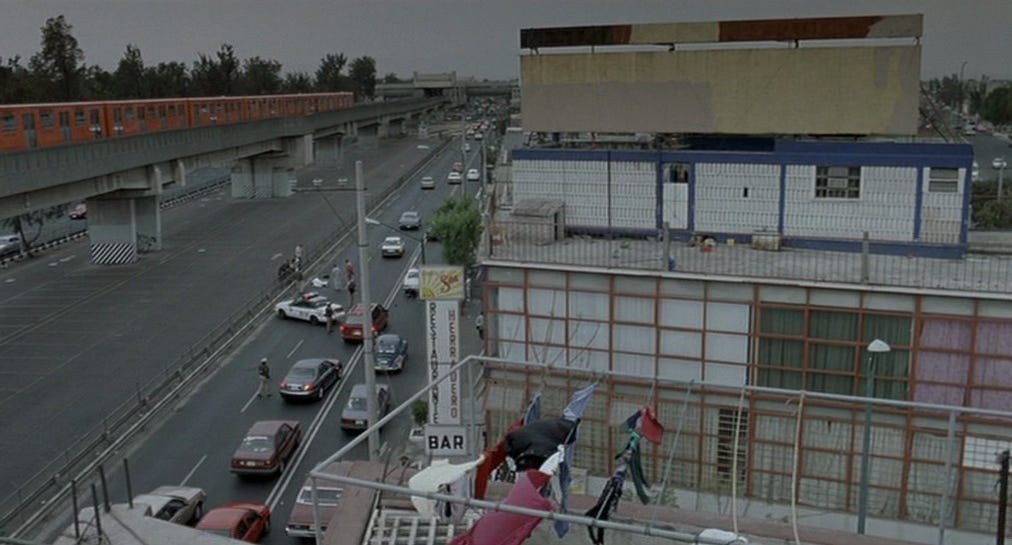
Michoacán is a federal entity of Mexico with a large Indigenous population, specifically Purépecha, Otomi, and Nahua. Many Michoacanos experience violence and displacement due to the economy being controlled by drug cartels, forming self-defense militias in response or fleeing to larger cities in search of opportunity.
Mexicans are notably quite prejudiced against migrants, specifically Central American migrants (as noted in this paper, blog post, and opinion piece). The racist, classist views and criminalization of migrants is eerily similar to how the US views Mexican migrants.
Tenoch’s family. Tenoch belongs to a very politically powerful family, as his father is a Harvard-trained economist who would become Mexico’s Undersecretary of State. While his parents were originally going to name him Hernán, they chose the Aztec name “Tenoch” after becoming seized by nationalist pride.
There is a call-out within the Mexican community against those who are obsessed with Aztec culture, sometimes to the point of trading their Hispanic name for a Náhuatl one in their quest for a more decolonized ethnic identity. Ironically, the term Aztec purportedly has no precise meaning. The Aztec Empire also expanded by conquering and subjugating various Indigenous peoples and regions, and therefore are also considered by many to be colonizers in their own right.
The name Tenoch likely comes from Tenochtitlán, the capital of the Aztec Empire and largest city in the pre-Columbian Americas. It’s fitting because Mexico City, where he lives, is one of the largest cities in the world—18.6 million people in 2001, when the film was released.
Bodyguards of politicians. While at the President’s wedding, Tenoch and Julio count the bodyguards of the politicians, noting that more important officials have more bodyguards. Later, we see a waiter bringing food to the parking lot, where the bodyguards eat standing up or leaning against cars.
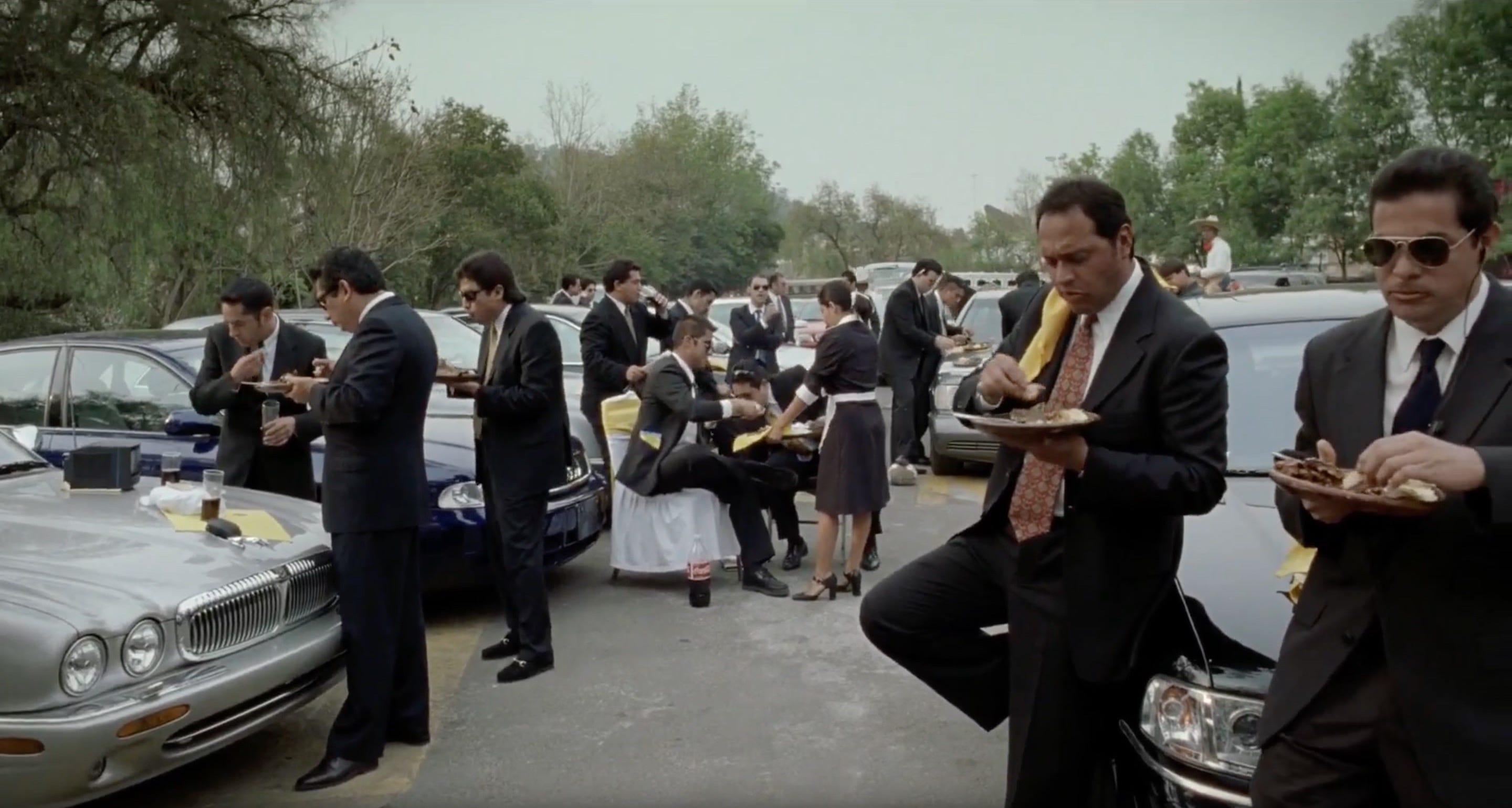
Though I was unable to find any significant information about bodyguards from the early 2000s, I found in the past ten years the number of bodyguards to Mexican officials have increased significantly and are abusing their power. This likely points to paranoia in the political climate and a culture of machismo.
At the same time, the bodyguards being relegated to the parking lot for their meals makes it clear that they are not “important enough” to merit a seat at the actual table, despite how dangerous the job of a bodyguard is.
Country club. Tenoch’s father is a majority shareholder of a country club with an extravagant pool that Tenoch has access to when the club is closed for maintenance. The boys go swimming, and later masturbate together on the diving boards (several feet apart because they’re not gay).
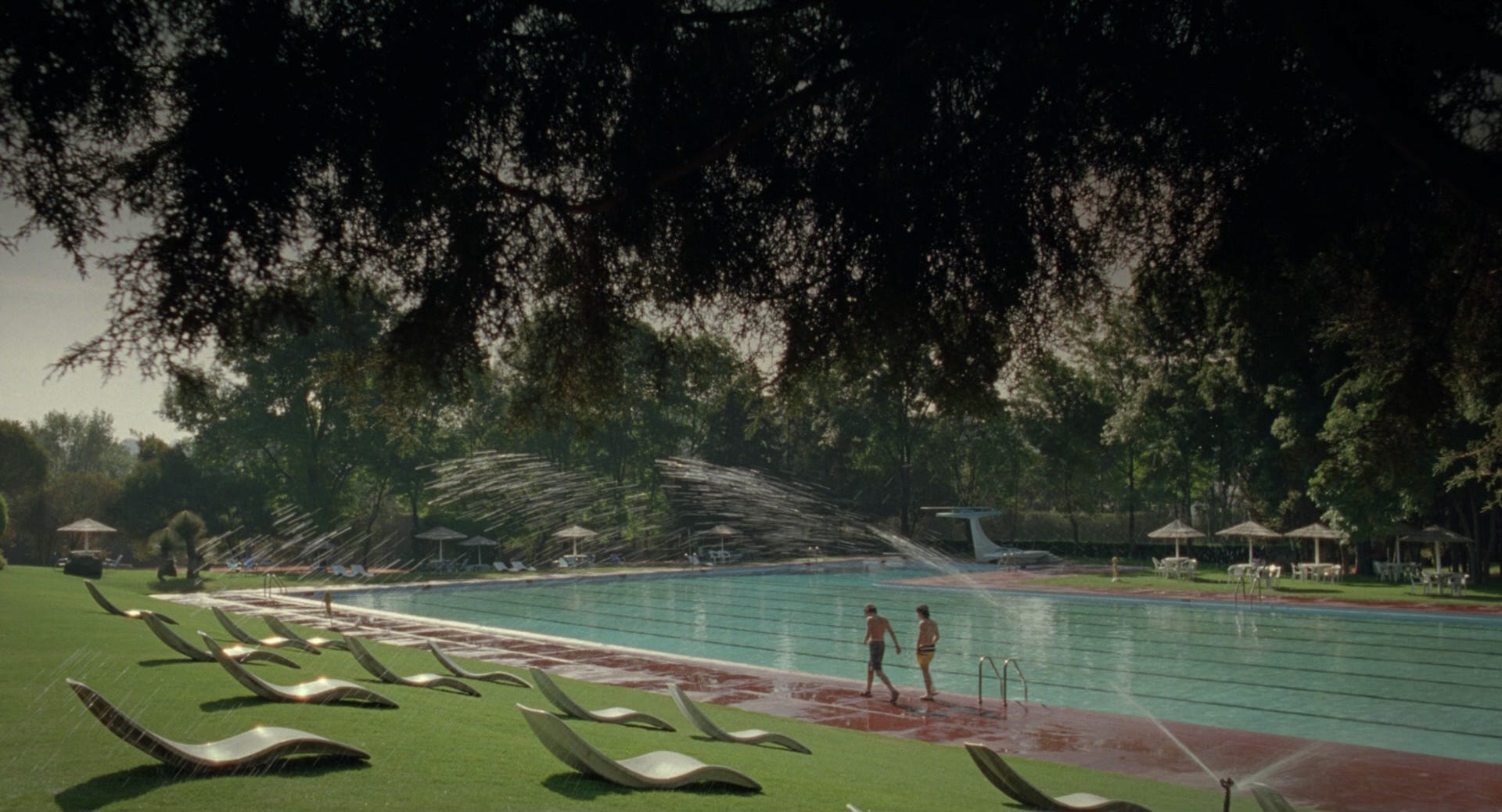
While this study focuses on the upper class WASPs of the US, private country clubs are universally considered a gathering place for men in control. The study specificies that rather than being purely for leisure, country clubs create and maintain social networks for the powerful elite with an emphasis on exclusivity. This is where decisions are made.
Franco supporter. Luisa, a beautiful Spanish woman married to Tenoch’s cousin Jano, was orphaned as a child and raised by her great-aunt, a Franco supporter.
Francisco Franco was the military dictator of Spain from 1939 to 1975. He was a prominent anti-communism leader, and his regime was supported by Fascist Italy, Nazi Germany, and the US. While Luisa doesn’t outwardly seem to have conservative or fascist views, this is perhaps meant to highlight her roots as a Spaniard.
Puerto Escondido. Luisa wants to go to the beach while in Mexico and originally hopes to catch a bus to Puerto Escondido. Tenoch and Julio tell her not to bother, as it’s overrun by “yuppie backpackers and wanna-be surfers.”
While it was a small, relaxing beach town a couple decades ago, Puerto Escondido exploded with international tourism since the Covid pandemic in 2020 (I’ve actually been, and can confirm it’s overrun with tourists primarily from Europe). However, its existing infrastructure is unable to support the tourist-dense population, leading to several economic and environmental issues as sewage increases, wildlife disappears, and the cost of living soars.
The “yuppie backpackers” likely refers to the increase in digital nomads, who work online while traveling abroad, often to regions with a very low cost of living. The digital nomad lifestyle has been criticized as a form of neocolonialism.
Cerro Verde massacre. The President left his own wedding early to attend an urgent meeting with party leaders to appoint candidates in upcoming elections. He would express outrage at the Cerro Verde massacre and deny that the state governor had been involved in any way. After briefly offering his condolences, he’d fly to Seattle for a world summit on globalization.
While the Cerro Verde massacre appears to be a fictional event, this is likely a reference to the several massacres in Mexico in the 20th century, representing the state of civil unrest and police brutality. Denying the state governor had been involved in any way, of course, implies that the governor was indeed involved. The police and army act based on the orders of the governing body, and on several occasions enacted violence on the people. For example, in 1997 the state police assaulted hundreds of supporters of the Zapatistas, a militant far-left group, in the San Pedro Nixtalucum Massacre. This was a way of controlling the people and stifling dissenters.
Globalization, especially when led by the United States, is typically a euphemism for imperialism. Seattle is also notoriously expensive, as Washington state’s top employers include corporations like Amazon, Microsoft, and Starbucks.
Brown women laborers. In Tenoch’s family mansion and in the first restaurant they go to on the road trip, we see the kitchens where women prepare their meals. The women visibly appear more brown than Tenoch and Julio.
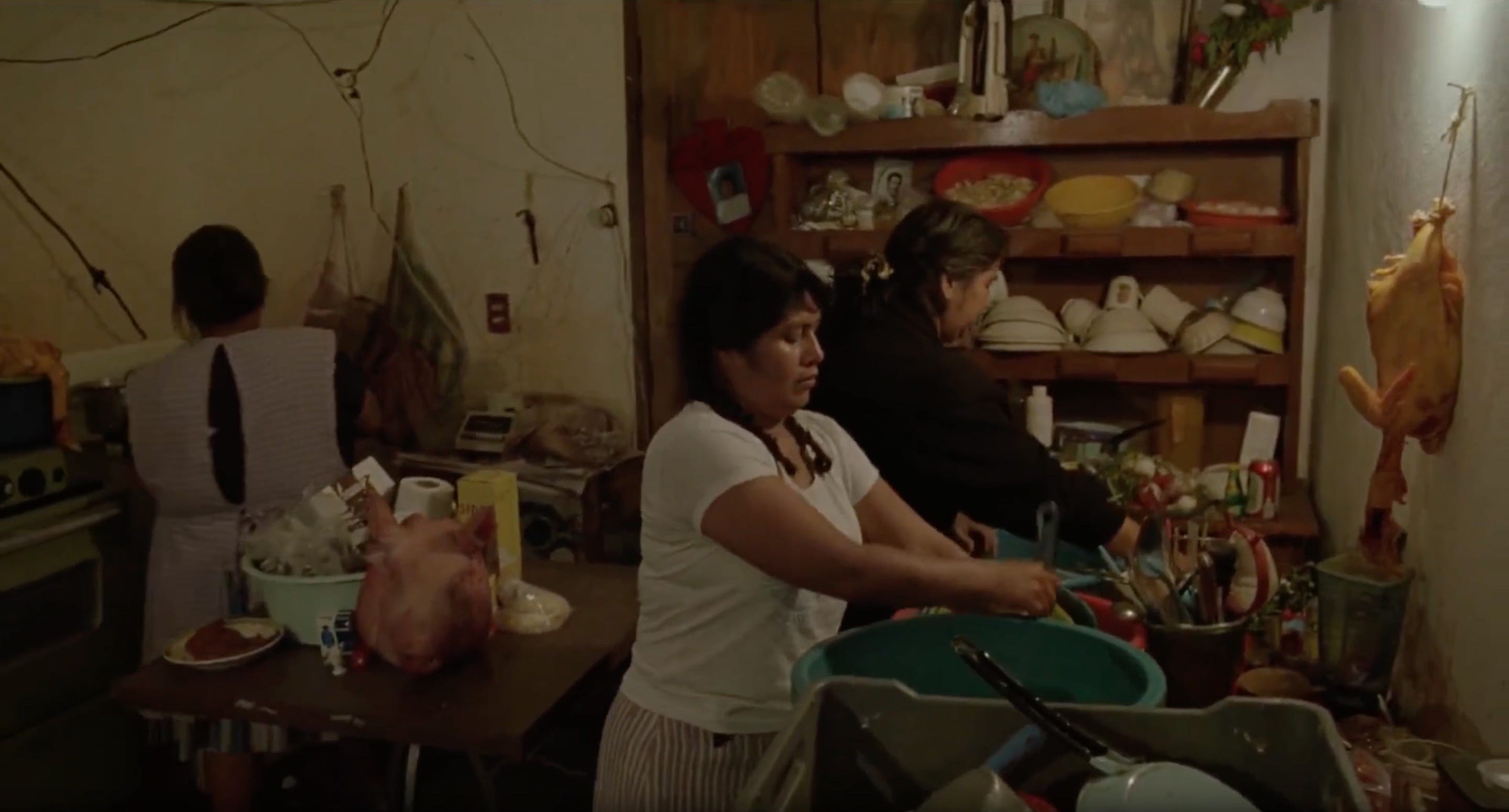
Most domestic workers in Mexico are women, and many don’t have adequate labor protections. As also depicted in the film Roma, Indigenous women often bear the brunt of both physical and emotional labor for the white/mestizo upper class. Their experience exists at intersection of gender, race, and class.
Julio’s family. Julio lives in an apartment with his sister and mother (his father hasn’t been in the picture since he was five). The space is filled with a mix of eclectic furniture and memorabilia. His mother works as a secretary for a multi-national corporation.
Julio’s home is noticeably more cramped than Tenoch’s mansion, showing their class and wealth disparity. Multi-national corporations are becoming increasingly common within global capitalism, and represent a complex web of exploitation across borders.
Protests and Chiapas. Julio’s sister Manuela, a political science major at the National University of Mexico, agrees to let Julio and Tenoch use the car for a few days to go to the beach. She would need it back for three weeks to deliver food, clothing, and medicine to Chiapas. The boys find her, fitted in a green camo jacket and black cap, at a political protest “en defensa de la educación pública y gratuita” (in defense of free and public education).
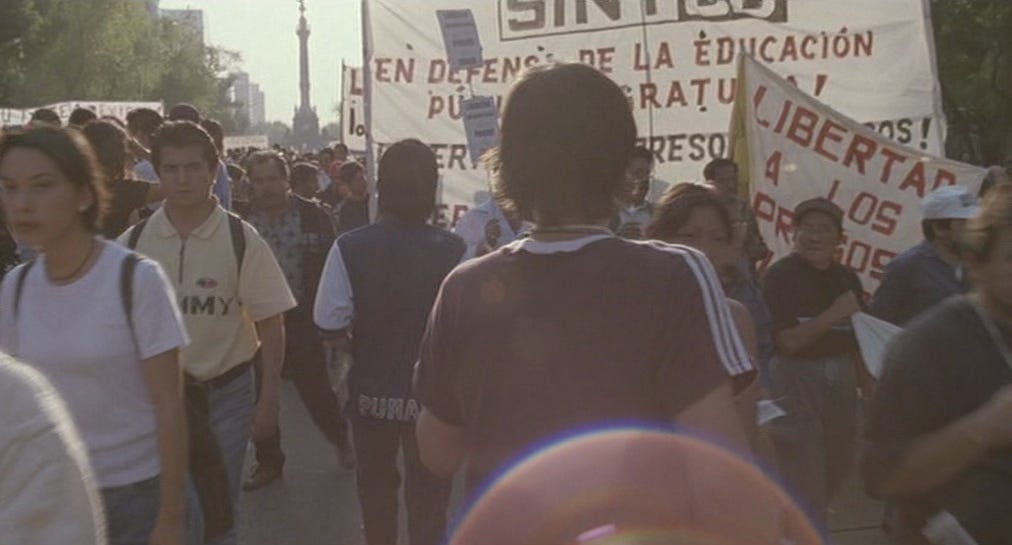
The protest that Manuela is attending may be part of the 1999 UNAM strike, which rallied against the significant tuition increase at the National Autonomous University of Mexico from 0.02 dollars to about 150 dollars (a 7,500% increase). The strike was made on the basis that the Mexican constitution guaranteed that all state education should be free.
Chiapas, officially known as the Free and Sovereign State of Chiapas, is the southernmost state of Mexico. Bordering Guatemala and the state of Oaxaca, most of the territory is controlled by the Zapatistas, a de-centralized, far-left group of mostly Indigenous geurilla fighters and activists.
Manuela’s militant attire resembles how Zapatistas are often depicted, implying she is a strong supporter/accomplice. She is likely delivering supplies because Chiapas’s infrastructure is severely lacking, making a great deal of the rural land unlivable (a big motivation for the Zapatista movement in the 1990s).
Che Guevara. A poster of Che Guevara is visible in the background while Tenoch and Julio get directions from their friend Sabo.
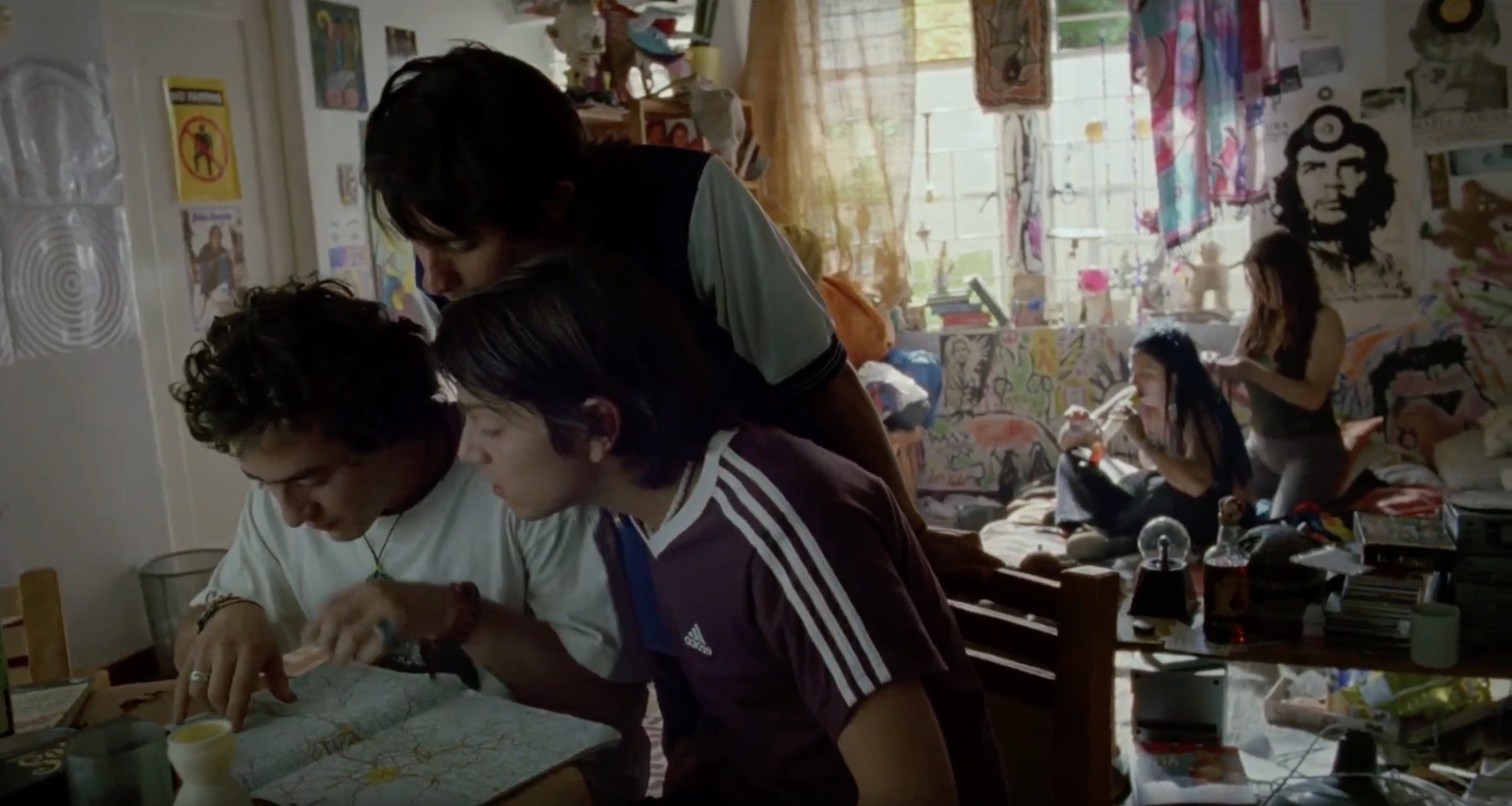
Che Guevara is a prominent Marxist revolutionary from Argentina. He worked briefly as a doctor in Mexico City before joining the guerilla army in Cuba, where he was known for being a brave, intelligent, and often ruthless commander. After leading social reform in Cuba (with an emphasis on land reform, literacy, and militarism), he traveled to aid other anti-imperialist movements across Africa and South America before he was ultimately assassinated by CIA-assisted forces in Bolivia.
Class tension between Tenoch and Julio. There are certain things that Tenoch and Julio don’t discuss, like how Tenoch lifts the toilet seat with his shoes at Julio’s house (he does this at the motel as well) and how Julio lights a match when he goes to the bathroom at Tenoch’s house. Later, when they’re fighting over infidelity with each other’s girlfriends, Tenoch calls Julio low-class trash. While Tenoch freely gives loose change to beggars, he rarely offers to lend a hand, happy to order Julio around to get him a beer or to let Chuy do the fishing.
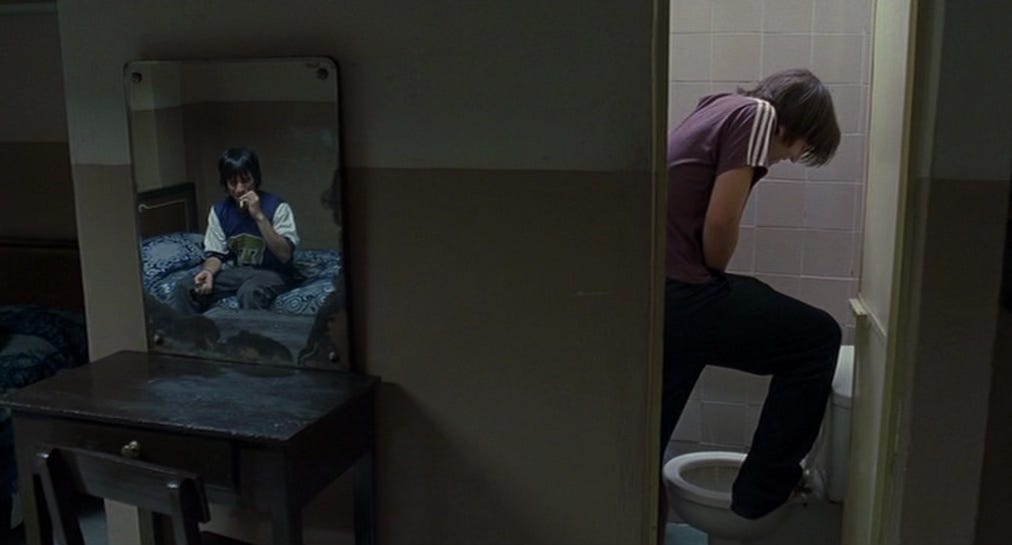
Considering the political position of his father and size of his family mansion, Tenoch is likely amongst the wealthiest of Mexico. By comparison, Julio represents the middle class. His family is not nearly as wealthy, but they have enough money to live in the city and avoid hard manual labor.
At the time of this movie’s release in 2001, Mexico’s middle class was significantly smaller at about 35% of the population. In 2022, that rose to over 55%.
Tepelmeme. While driving through Tepelmeme, Tenoch reminisces how his nanny Leodegaria Victoria, aka Leo, was born in Tepelmeme and migrated to Mexico City when she was thirteen. He called her “mama” until he was four.
Tepelmeme is a small village in the state of Oaxaca. Tenoch’s nanny Leo likely would’ve migrated from Tepelmeme to Mexico City in search of economic opportunity.
Being a nanny to a wealthy family is a notoriously taxing job, both physically and emotionally. Nannies often become maids, educators, and motherly figures, and sometimes understanding the children they care for more than their birth mothers.
Chicken truck crash. If they had driven past a certain stretch of the road ten years earlier, they would’ve come across an overturned truck that burst into flames, with broken cages and bleeding chickens scattered on the road. A woman would’ve been crying inconsolably next to two lifeless bodies on the road.
Truck accidents are extremely dangerous and unfortunately more common than they should be because the economy relies on them to transport material goods on land, putting pressure on the truck drivers to drive in a way that can meet unrealistic deadlines.
Data Mexico has compiled truck driver workforce data from 2012 to 2026. Of note, the southern regions of Mexico are amongst the lowest in salary but the highest in labor informality (especially Chiapas and Oaxaca). This implies that these regions, which have a high Indigenous population, are more likely to be exploited and put in dangerous situations.
Checkpoints. On the way to the beach, there are checkpoints presumably searching for drugs and weapons (“Shit, hide the stash.”) We see multiple soldiers in green uniform searching other cars as they drive past. Julio is notably more shaken while Tenoch is determined to act like nothing is wrong.
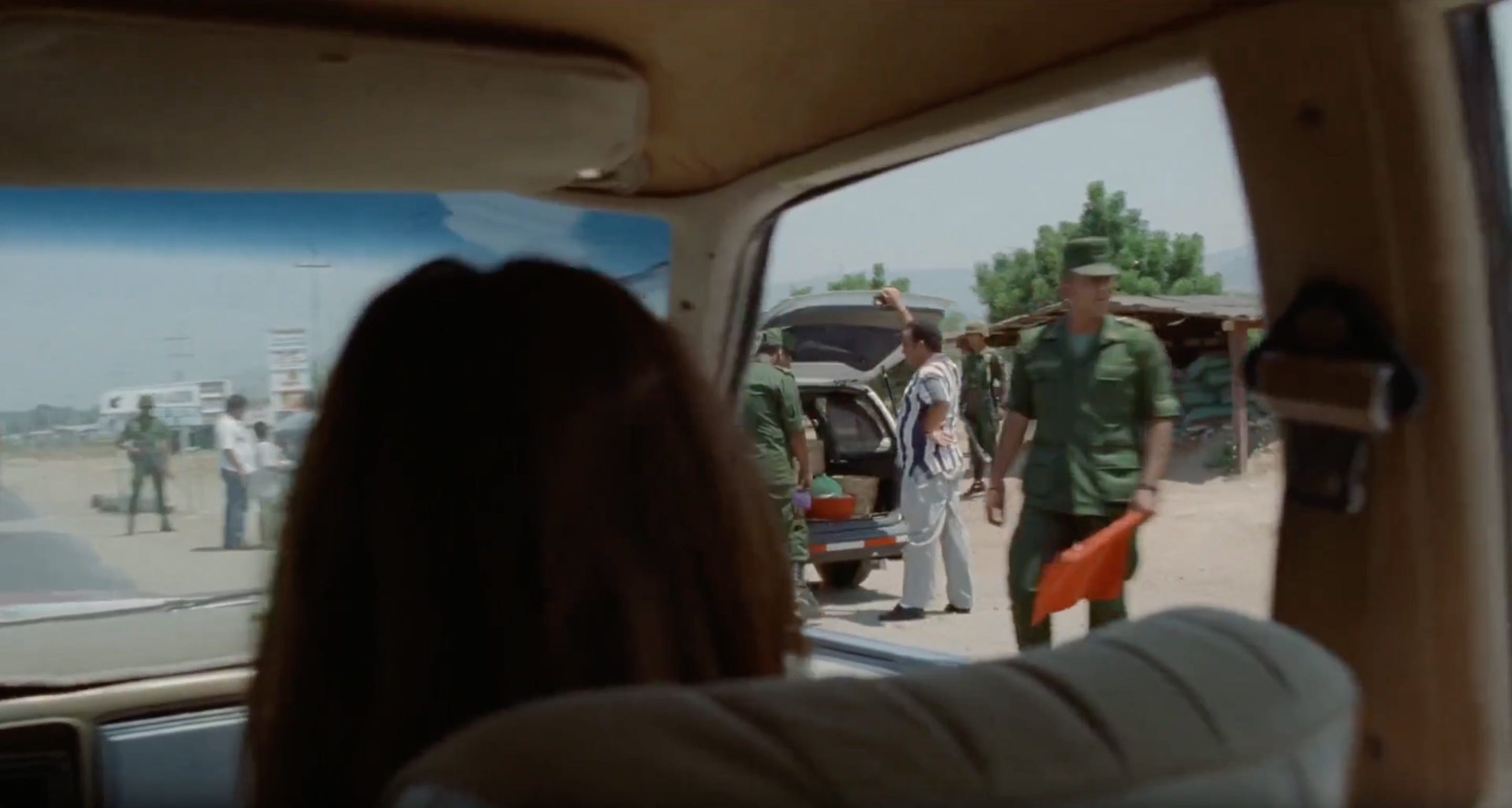
The green uniform implies that these soldiers are part of the Mexican Armed Forces. Something I found interesting is that the armed forces took a prominent role in Mexico’s War on Drugs starting 2006, but this movie was released in 2001. That makes me wonder if perhaps the armed forces was already informally increasing their surveillance prior to 2006.
It’s clear that if they were stopped and searched, Tenoch would receive more favorable treatment thanks to his connections while Julio would bear the brunt of whatever punishment the soldiers dish out.
Police arrest street peddlers. A truck with blue-uniformed police carrying machine guns pass by them to arrest what looks like a group of street vendors on the side of the road.
Mexican law enforcement is very militarized, and in that way not too different from US law enforcement. Because street vendors are often extorted by local crime bosses, required to pay a fee to be “allowed” to sell products on their territory, it’s possible the police officers were arresting them in an attempt to get closer to the crime syndicates. Or perhaps it was simply for some other criminalized behavior, like trespassing or vending without a permit.
Heat stroke crossing border. When their car breaks down, they make a pit stop and get some help from kind strangers (the man doesn’t accept money, and even gives Julio his hat when he compliments it). Luisa orders fresh coconut water and observes a table of offerings to the dead. She tells the 98-year-old woman, Doña Martina, that the teddy bear shares her name, “Luisa.” Doña informs her that it belonged to her granddaughter Luisa Obregón, who died of a heat stroke crossing the Arizona border with her parents in search for a better life.
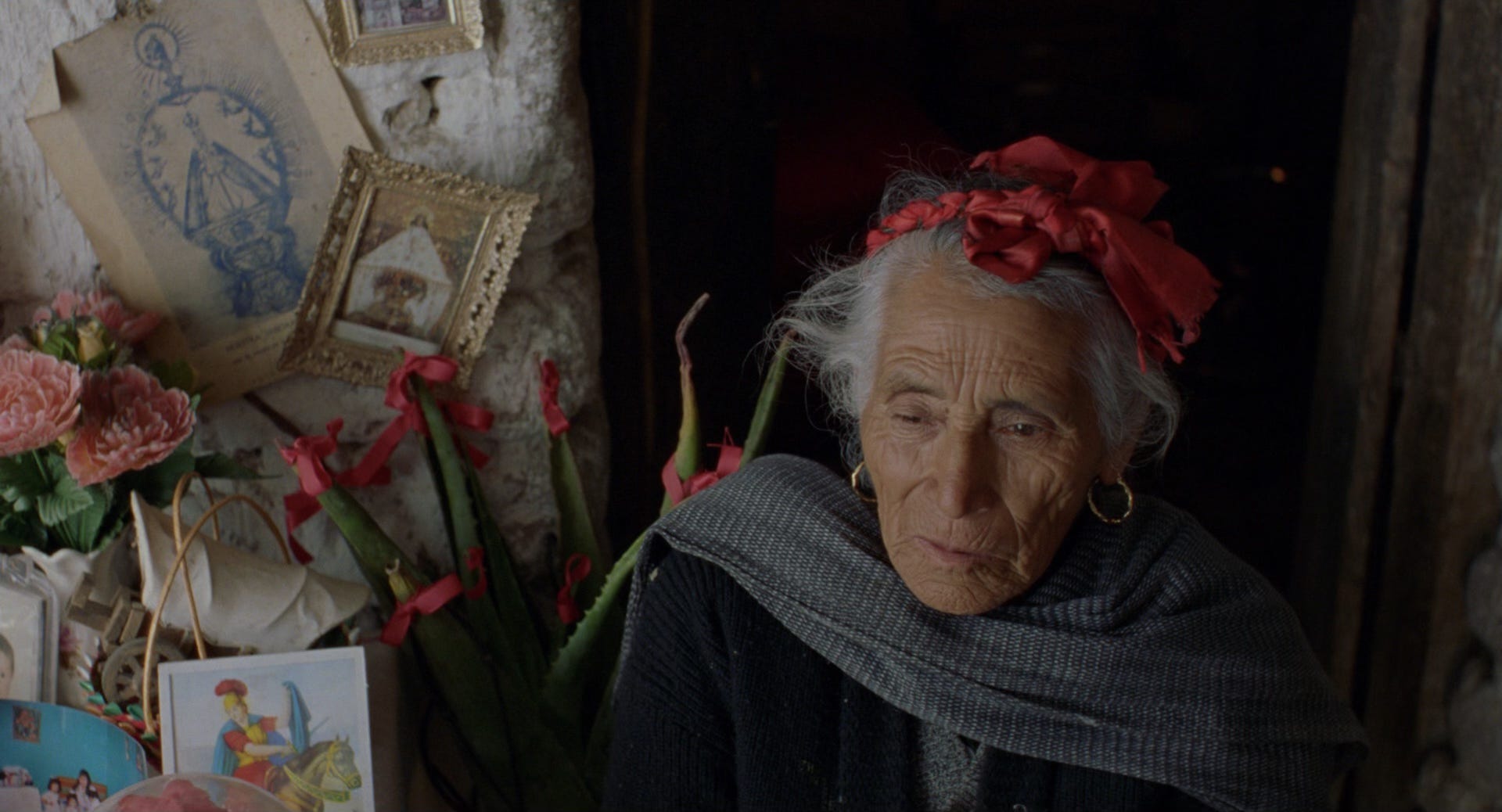
Undocumented migration across the Mexico-US border has occurred since its creation 1848, and policed since the creation of the US Border Patrol in 1924. Like many modern borders, it’s little more than an arbitrary line determined by colonial powers.
For migrants crossing the border, the journey is exceptionally dangerous and often fatal. While this article was written in 2025, the dangers are undoubtedly the same—extreme environmental conditions, risk of drowning, and risk of blunt-force trauma. The Sonoran Desert, located in southwest US and northwest Mexico, is one of the hottest places on earth, and its extreme temperature fluctuations leave migrants vulnerable to hypothermia or hyperthermia. In these remote areas, they also have limited access to shelter, food, and water.
4th generation fishermen family. When they finally arrive at the beach, they meet Jesús Carranza (aka Chuy) and his wife Mabel, the fourth generation of a family of fishermen that lives nearby in the village of San Bernabé. Mabel cooks them food on the sand while holding her young child to her chest. Chuy offers to give them a tour of neighboring beaches the next day for 350 pesos, including food. For reference, this converts to 35.82 USD in 2001 (this would be worth 66.71 USD in 2026).
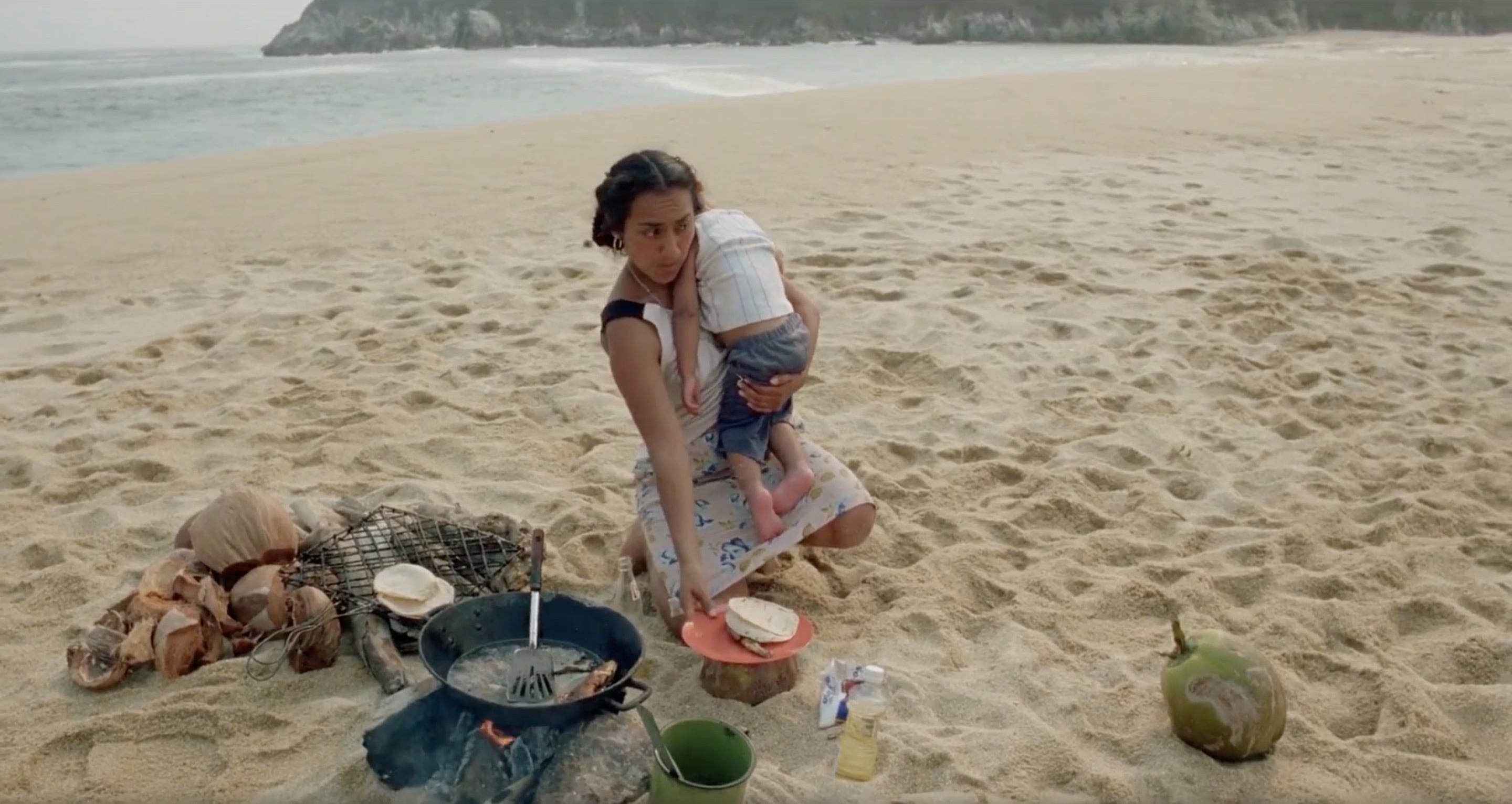
Fishing has a long history in Mexico that pre-dates Hispanic influence, especially the region of Oaxaca, which has only about 9% arable land and therefore historically relied more on hunting and fishing. Small-scale fisheries face numerous challenges against the dominance of industrialized, large-scale fisheries, including sustainability concerns on over-fishing. Like many other locals, it’s likely that Chuy and Mabel’s family found tourism a much more reliable source of income than fishing.
Beach football. Julio and Tenoch play football with Chuy on the beach. Chuy narrates their play by play like a sports commentator, shouting, “Ramón passes, Zepeda charges down the sideline. The Emperor steals. What a player!” (It appears that Zepeda refers to Julio and Ramón/Emperor refers to Tenoch.) When Tenoch shoots, Chuy catches it and yells, “What a save! Campos! That’s why he’s on the national team.” When Tenoch and Julio merely chuckle, Chuy asks, “What, you don’t like Campos?”
I believe these are all real football players, and that Zepeda refers to Miguel Zepeda, Ramón to Ramón Ramírez, and Campos to Jorge Campos. Campos is known for a more eccentric and flamboyant style, which might explain Tenoch and Julio’s laughing at his name. In 1999, Campos’s father was kidnapped by six to eight armed men (who remained anonymous), likely so that they could exchange him for ransom.
Especially considering how the sport is more affordable than others (no expensive equipment, if you have an open field and a ball you can play), professional football is the path to financial stability for many young people, some with a net worth of tens of millions of dollars. Compared to other celebrities and politicians, a football player’s family member would be an easier target for kidnapping given that they probably lack security personnel.
Hotel construction. At the end of year, Chuy and his family would have to leave their home to make way for the construction of an exclusive hotel on the communal land of San Bernabé. They would relocate to the outskirts of Santa María Colotepec. Chuy would attempt to continue giving boat tours, but a collective of Acapulco boatmen supported by the local tourism board will block his plans. Two years later, he would become a janitor at the hotel and never fish again.
As of 2021, Mexico is leading Latin America’s hotel development. This alludes to what I somewhat jokingly, somewhat seriously call the tourism industrial complex. Mexico’s resort tourism has led to serious environmental consequences, including water scarcity, pollution, and deforestation. The hotels themselves are owned by the wealthy few, such as the five millionaire families who own most of Cancún, creating an exploitative system of labor.
The tourism board blocking Chuy from continuing his boat tours is likely an initiative meant to reduce informal labor in the local economy. While regulation can help with accountability and workforce protections, it also clearly impacts the financial autonomy of individuals and families.
Pig disease outbreak. After a day of beach touring, they return to the campsite and discover it’s been raided by pigs. Since this rendered their campsite unlivable, Chuy offers them a room with electricity and water for 75 pesos (7.68 USD in 2001, 14.30 in 2026). The 23 pigs escaped from a nearby ranch. In the next two months, 14 would be slaughtered, and amongst those 3 would cause an outbreak of trichinosis among the attendees of a festival in the village of El Chavarín.
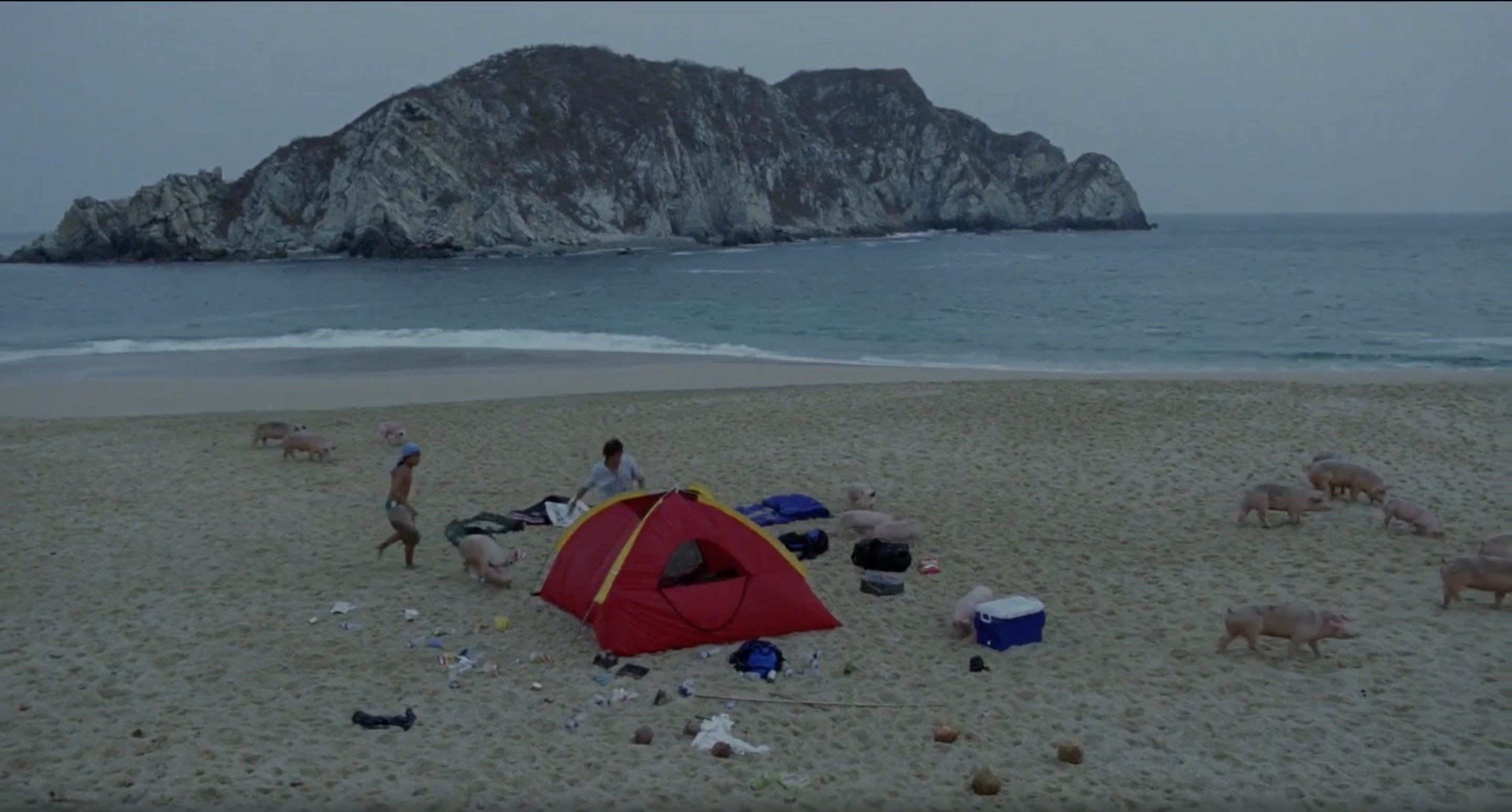
Trichinosis is a parasitic infection mainly spread by undercooked meat that contains Trichinella cysts. Because disease can spread so easily when handling livestock and food, biosecurity and disease control is an international concern, not just local to Oaxaca. Part of this effort is monitoring the movement and food consumption of the livestock, which was clearly compromised when these 23 pigs escaped and started eating whatever they could find on the beach. We can assume the ranch did not properly test/treat the pigs after re-obtaining them.
Bar music. At the bar for their last night together, Luisa puts on a song on the jukebox. At first she wants to play La Sandunga by Camilo Sesto, but then she asks the others for a random letter and number and gets B-13. The song that ends up playing is Si No Te Hubieras Ido by Marco Antonio Solis.
La Sandunga combines Spanish and Indigeous music elements into a Mexican waltz and is the unofficial anthem of the Isthmus of Tehuantepec, a region located in Oaxaca. Si No Te Hubieras Ido does not appear to have any particular significance, but it is a song of heartbreak and longing that suits Luisa’s emotional state at the time.
Ruling party lost. The following summer, Ana and Cecilia break up with Tenoch and Julio. The boys also stop talking to each other, their friendship over. The ruling party loses the presidential election for the first time in 71 years.
The Institutional Revolutionary Party (PRI) held uninterrupted power over Mexico from 1929 to 2000. The party used a number of strategies including electoral fraud and corruption to maintain power, while the common people experienced numerous hardships, including a series of economic crises beginning in the 1970’s.
The winning candidate for President was Vicente Fox Quesada. Despite his campaign promises to break away from the authoritarian policies of the PRI, his administration continued the same neoliberal policies and established friendly relations with the US and Bush administration. They also covered up the unsolved murder of human rights lawyer Digna Ochoa, who they claimed died of suicide.
Visual symbolism and metaphors
Along with these explicit political references, there are also multiple scenes that I couldn’t help but notice elevated the story through visual symbolism.
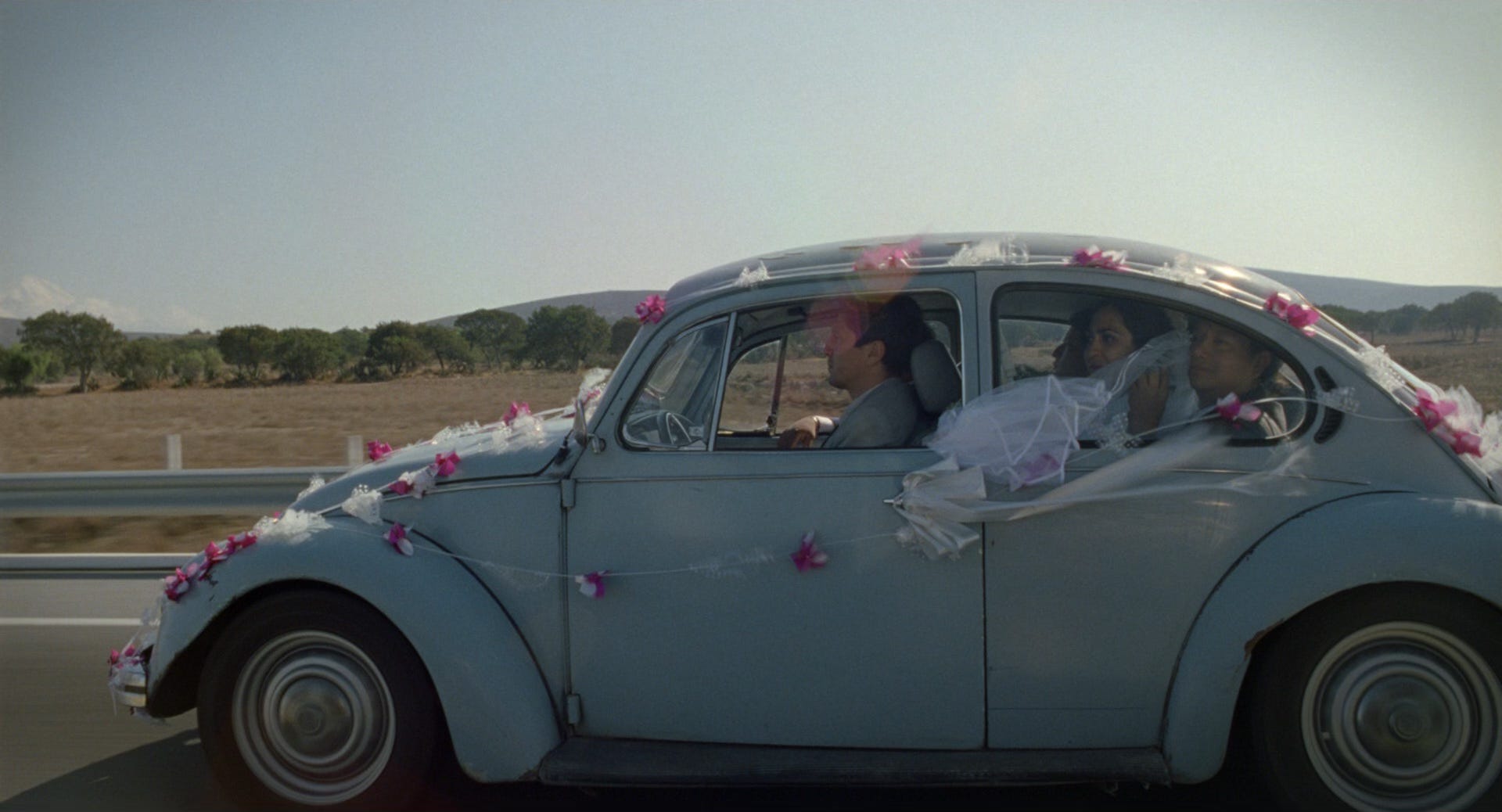
Bridal car. While Luisa talks about how she feels she doesn’t belong with her husband’s intellectual friends, they pass by a car of newlyweds covered with flowers. The car alludes to the original happiness Luisa experienced when she first met her husband, and the distance she feels from him now.
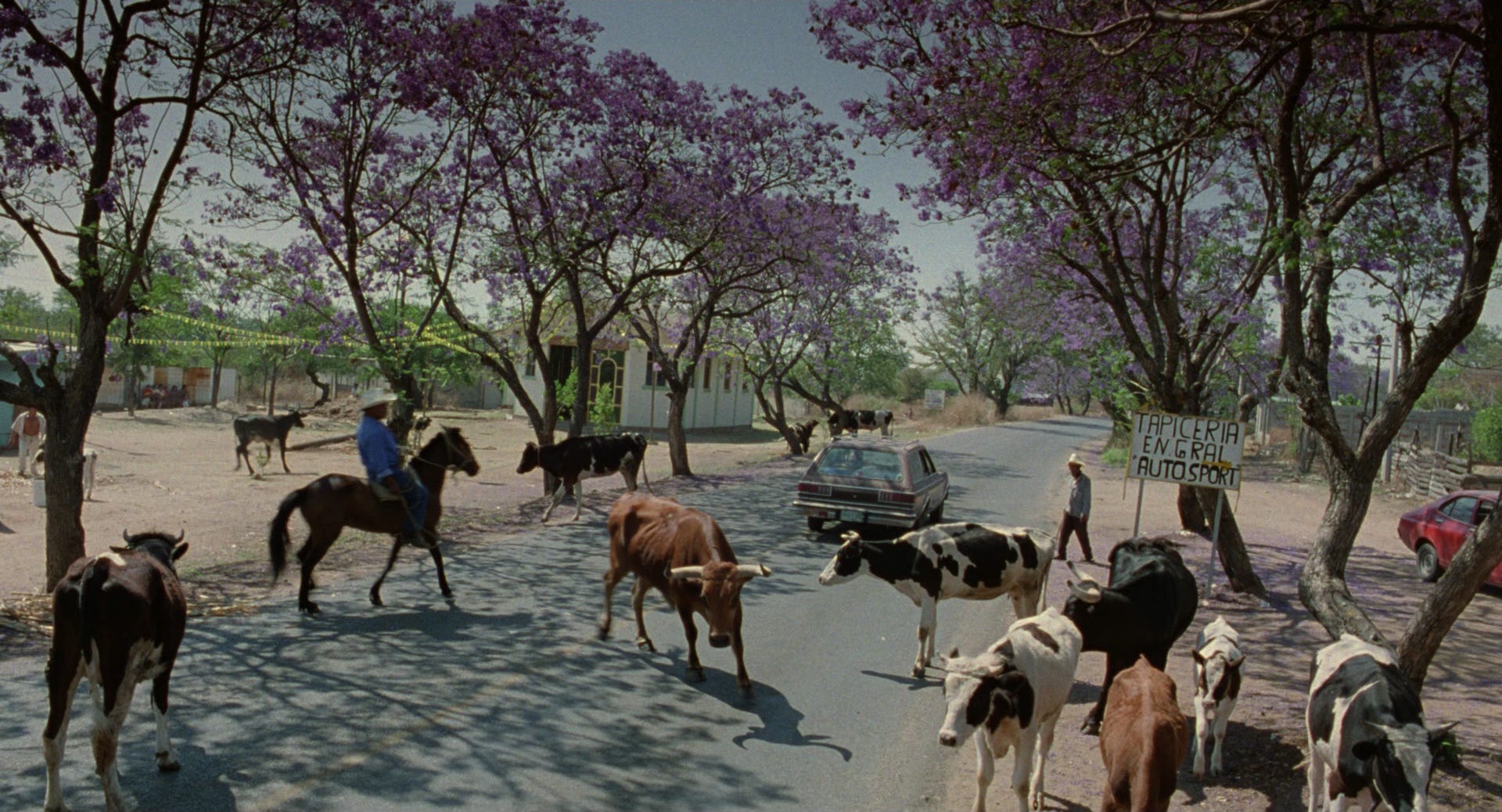
Bulls. When Tenoch wakes up from his nap in the back seat with an erection, they drive through a small herd of bulls. The bulls represent Tenoch’s (and Julio’s) lust, especially in the conquest-obsessed way that teenage boys often experience.
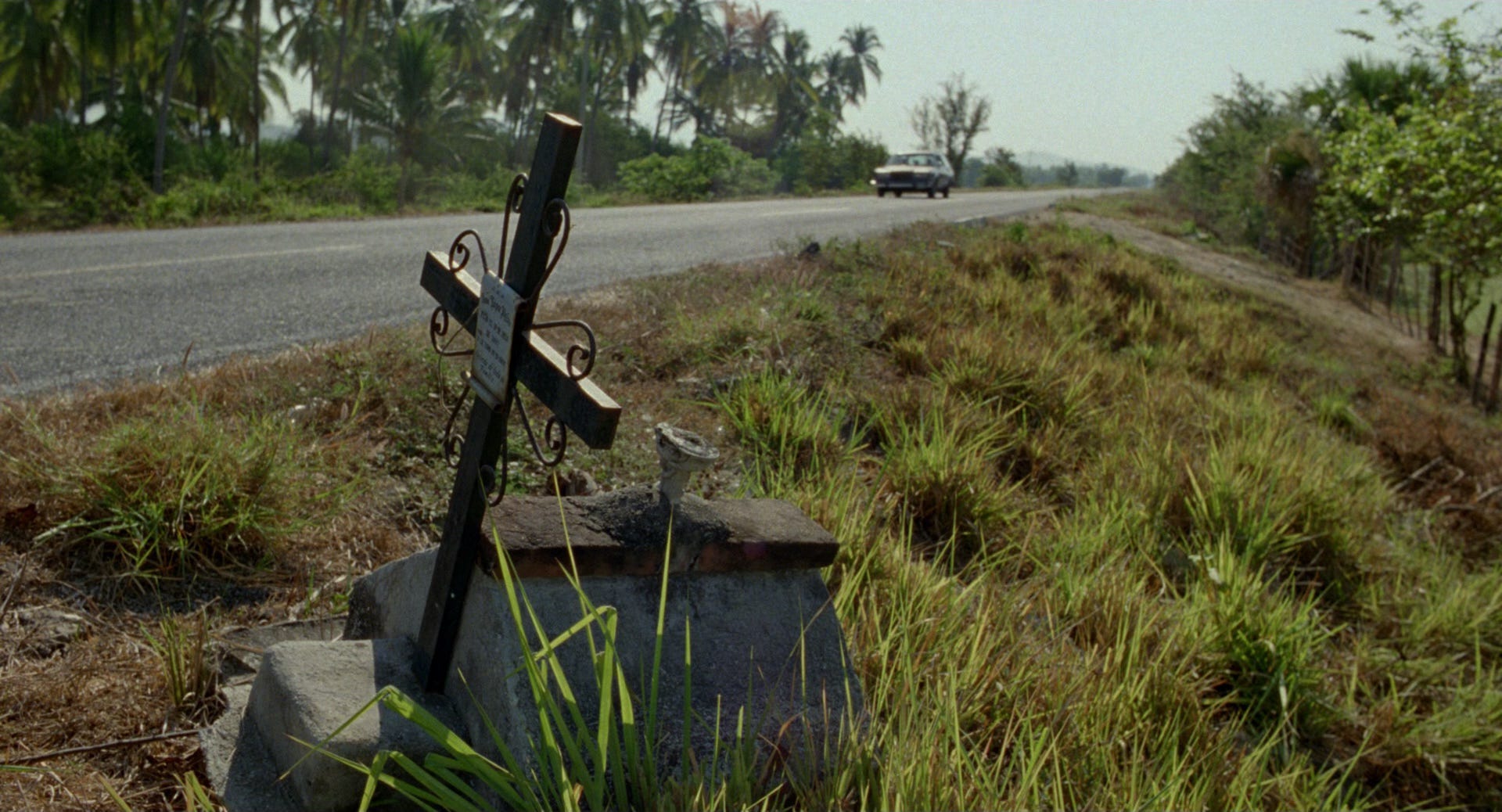
Funeral procession. After hearing about the death of baby Luisa, whom the teddy bear is named after, they pass by a funeral procession holding the coffin up on their shoulders. Later, they also drive past a roadside grave in the form of a cross. These all foreshadow Luisa’s fate with terminal cancer.
Horseback cops. While we don’t see Tenoch and Julio return to the city, we see cops riding on horseback in the city while the narrator informs us that their girlfriends break up with them after returning from their trip. The boys move on to university and new girlfriends, their friendship ruined. The horses represent how their experiences in the countryside have undoubtedly followed them back into the city, even if they deny it.
Lastly, there were some scenes I didn’t quite understand. Specifically, when they drove past a bike carriage and a large truck decorated with flowers and banners. Or when they drove up to a string of balloons, where a group of people asked for a donation for their “queen.” Julio received a sticker in exchange for the donation. Later, they also passed by a family washing clothes in the river. If you have any theories or insights about these scenes, please let me know.
My mind is swimming in thoughts
With a legacy of over twenty years, Y Tu Mamá También has no shortage of well-written analyses. I don’t believe that I have anything particularly new or unique to contribute. But even so, I had so many thoughts watching this that I can’t help but try to put them down on paper.
Lust for Mother Spain. The boys both became obsessed with a woman from Spain, and that’s not insignificant. Though she as an individual was quite sweet and unprejudiced, their lust for her represented something bigger—namely Mexico’s desire to uphold colonial values and perpetuate Spain’s legacy. Even as the country was erupting into social unrest around them, Julio and Tenoch cared more about a sexy beach trip than mutual aid to Chiapas or fighting for affordable education.
Was sex a pavlovian response to grief? It did not escape me that every time Luisa was confronted with immense sorrow, whether it was learning of her husband’s infidelity or processing her cancer diagnosis, she would almost instantly become horny and reckless. She didn’t even enjoy having sex with the boys, calling them immature and pathetic, and chastised them for cheating on their girlfriends. But still, she would strip her clothes and jump them whenever something tragic happened.
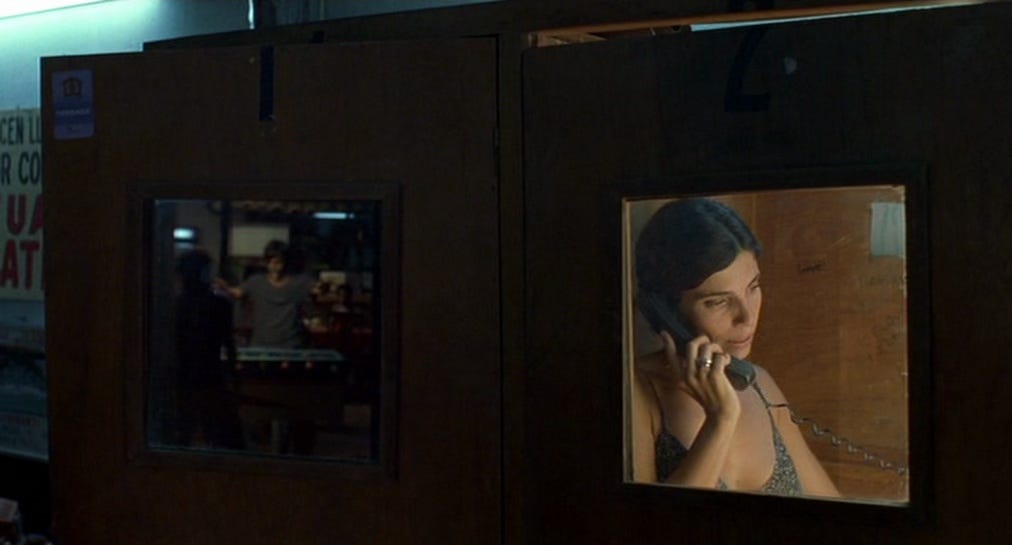
This could only mean that she is likely trying to overcome some deep inner wounds, and is using her sexuality and desirability as a means to escape emotional pain. Perhaps as a response to past sexual abuse? Or perhaps a more general response to being objectified as a woman? Whatever the reason, I found it very tragic but beautiful to watch. Luisa is a flawed but very brave and sympathetic character.
Men construct intimate rituals just to touch each other. The only thing louder than the copious homophobia was the sheer amount of homoerotic tension between Julio and Tenoch. The pool scene, the shower scene, the intense jealousy and competitiveness—their friendship was very sexual even from the start. Luisa said it better than anyone, men go through all this ridiculous conflict but in the end, they just want to fuck each other.

I’ll be honest, I was quite shocked when they actually kissed each other. I didn’t think they’d actually cross that line. And I felt quite sad that after a (presumably long and intense) threesome, they were both too disgusted and filled with internalized homophobia to reconcile with each other. But given their upbringing and general atmosphere of toxic masculinity, that is the more realistic ending.
They are oblivious to the story and they are the story. At first, I assumed that this little sex-on-the-beach adventure was a distraction from the real story. I believed the story was happening all around them—the social upheaval and poverty and inequity that I described in the references—but they were too absorbed in their fantasy world to notice. However, once I realized they represented the upper and middle class of Mexico, I discovered they were the story. Luisa was dying, Spain’s power was fading, and yet they still betrayed each other in order to win her favor. In that sense, both are true. They are willfully ignorant of the political unrest around them, and they themselves are the unrest.